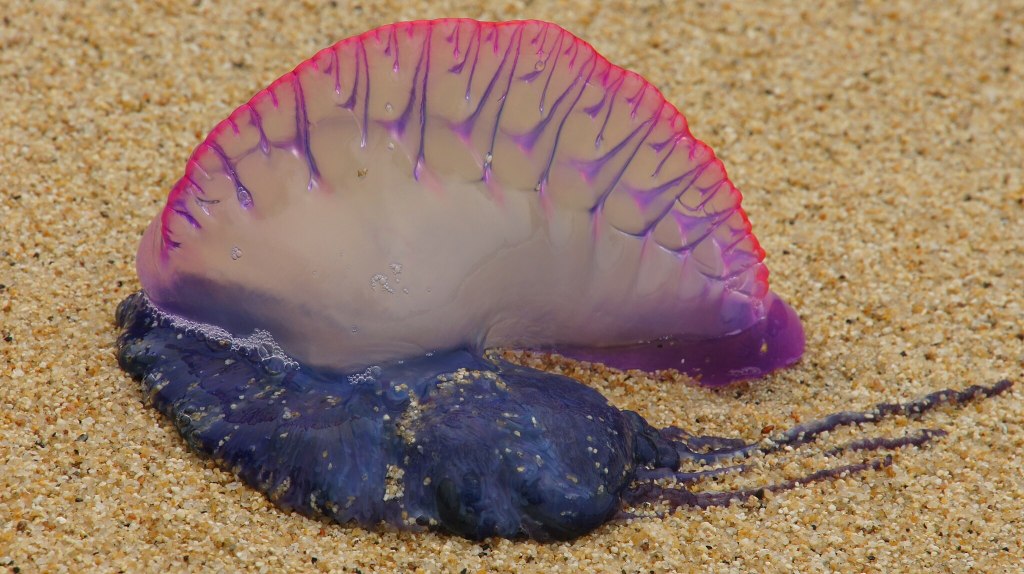
Alien-like Creatures Reveal Aspects About Open Ocean Diversity
Have you ever heard of the sailing siphonophore? Probably not, but they are incredible invertebrates. They are jellyfish-like creatures that use a gas-filled float and muscular crest to catch the wind and sail vast distances across the open ocean. Some of them are bioluminescent of different colors like blue, green, and even red. They have long tentacles for stinging their prey. Most are not harmful to humans – but don’t go picking a fight with the Portuguese Man o’ War – its tentacles can reach up to 30 feet and cause severe pain. We haven’t even gotten to the coolest part. Do I have your attention?
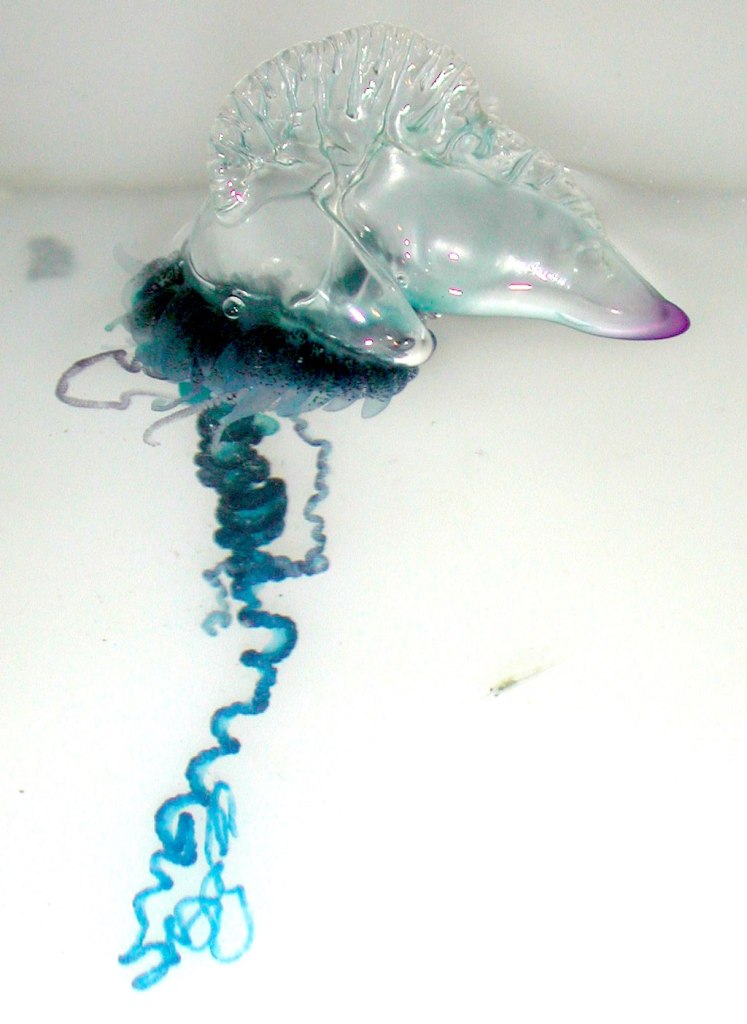
Sailing siphonophores, despite looking like one organism, are actually a collection of individuals called zooids that each play a unique role to make up the functioning whole. Growth starts with a zooid that buds asexually (meaning a partner is not needed) and eventually different collections of the zooid clones take on different roles [like one group making the gas-filled float while another makes the structure that allows them to swim]. In a way you can think of it like each group of zooids make different organs, but they still remain distinct individuals. That is why siphonophores are referred to as a colony organism. Because of their uniqueness, scientists have been fascinated and eager to study their biology.
In a recent study published in Current Biology by a group of global scientists something unexpected was found by studying siphonophores that may change the way we think about the open ocean.
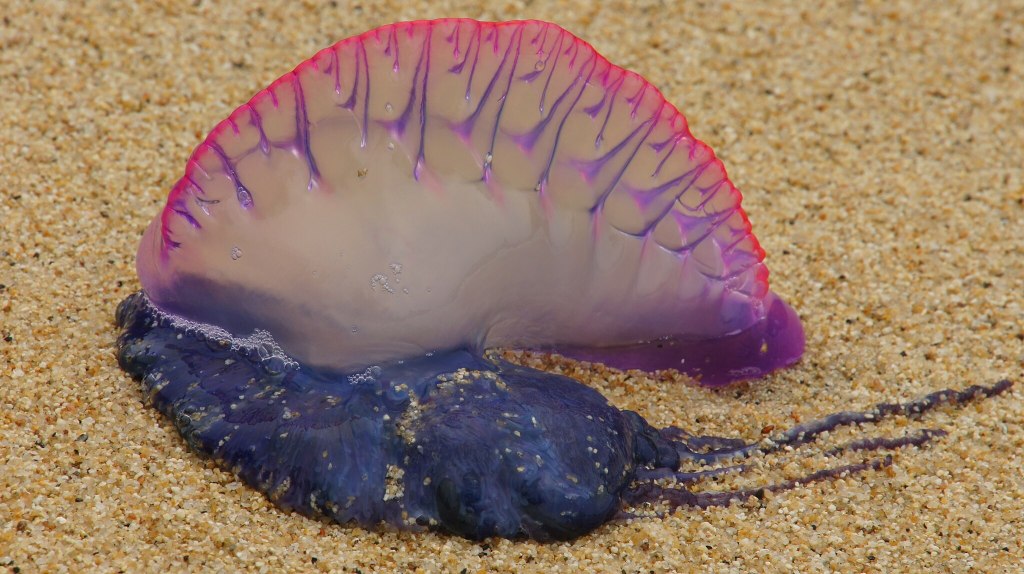
In this study, the researchers sequenced the genomes of 151 individuals from across the globe and looked within their genetic code. They combined the genome analysis with a morphology analysis through using citizen science and examining photos taken by citizens. Through these combined data sets, the researchers were able to distinguish different species within the Physalia genus and even identify a new one!
So what is the big surprise?
It is the fact that despite siphonophores living across the open ocean, the researchers found that there is still substantial oceanographic partitioning and reproductive isolation between subpopulations in different regions.
This challenges one long-standing assumption: that open-ocean species, lacking geographic barriers, should have lower genetic diversity and evolutionary potential due to widespread interbreeding. The researchers found ocean and wind circulation patterns acted as barriers as the different subpopulations correlated to them (with some individual exceptions).
So, scientists have shown evidence of isolation occurring even in the open ocean—findings that might apply more broadly to other open-ocean dwellers. This seems likely based on the fact that the study aligns with a growing body of research revealing unexpected genetic structure in other open-ocean organisms. Future research will need to explore how physical and biological processes generate and maintain this diversity. Surprisingly, these lesser known, alien-like organisms may help us rethink our expectations about open-ocean biodiversity.

 Science With A Funguy

Leave a comment